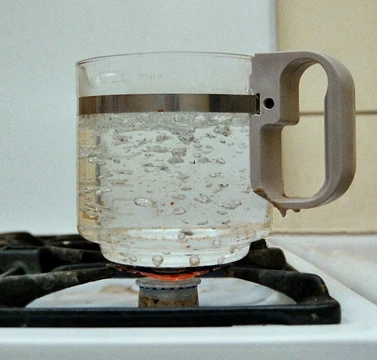
Purified water
Water processed to remove impurities for specific uses.

Purified water is water that has been mechanically filtered or processed to remove impurities and make it suitable for use. It is produced in a range of purities and has many uses, largely in the production of medications, in science and engineering laboratories and industries, and in the commercial beverage industry as the primary ingredient of trademarked bottling formulas to maintain product consistency.
- type
- Substance
- common_forms
- Distilled water, deionized water, double-distilled water
- key_impurities_removed
- Inorganic ions, organic compounds, bacteria, endotoxins, nucleases, particulates, gases
- typical_purity_measurement
- Parts per billion (ppb) or parts per trillion (ppt)
- primary_production_methods
- Distillation, deionization, reverse osmosis, carbon filtering, microfiltration, ultrafiltration, ultraviolet oxidation, electrodeionization
Lore & Background
Purified water is usually produced by the purification of drinking water or ground water. The impurities that may need to be removed include inorganic ions, organic compounds, bacteria, endotoxins and nucleases, particulates, and gases. Distilled water, produced by boiling water and condensing the vapor, was the most common form of purified water, but water is now more frequently purified by other processes including capacitive deionization, reverse osmosis, carbon filtering, microfiltration, ultrafiltration, ultraviolet oxidation, or electrodeionization. Combinations of these processes produce ultrapure water with trace contaminants measured in parts per billion or parts per trillion.
Reader's Guide
Purified water is significant because it enables critical applications in medicine, science, and industry where water purity is essential. The source article notes that distilled water, like all purified water, must be stored in a sterilized container to guarantee the absence of bacteria. Deionized water, which removes almost all mineral ions, is generally similar to distilled water but quicker to produce and does not build up scale, though it does not significantly remove uncharged organic molecules, viruses, or bacteria. Double-distilled water was historically the de facto standard for highly purified laboratory water for biochemistry and trace analysis until combination purification methods became widespread. The article also notes that in colloquial English, purified water can refer to water treated to neutralize, but not necessarily remove, contaminants considered harmful to humans or animals. The various methods—distillation, deionization (co-current, counter-current, mixed bed), softening, demineralization, and other processes like reverse osmosis—offer different trade-offs in purity, cost, and application, with mixed bed deionization producing the purest water from a single pass when properly pretreated.
Did You Know?
- Distilled water, like all purified water, must be stored in a sterilized container to guarantee the absence of bacteria.
- Deionization does not significantly remove uncharged organic molecules, viruses, or bacteria, except by incidental trapping in the resin.
- Mixed bed deionization uses a 40/60 mixture of cation and anion resin combined in a single ion-exchange column.
- Purified water is used in the commercial beverage industry as the primary ingredient of any given trademarked bottling formula to maintain product consistency.
Frequently Asked Questions
Who is Purified water?
Purified water is a processed form of water that has had its impurities stripped away through mechanical filtration or other treatment methods. It exists in varying degrees of purity and serves as a foundational ingredient across multiple industries.
What are Purified water's powers/abilities?
Its core ability is the removal of inorganic ions, organic compounds, bacteria, endotoxins, nucleases, particulates, and dissolved gases from raw water. Purity is typically quantified in parts per billion or parts per trillion, making it exceptionally clean for sensitive applications.
What are Purified water's common forms?
The most recognized variants include distilled water, deionized water, and double-distilled water. Each form represents a different level or method of impurity removal, tailored to the specific needs of the end user.
Why is Purified water important to the canon?
It is the primary ingredient in commercial bottled beverage formulas, ensuring product consistency across batches. It is also essential in pharmaceutical manufacturing, scientific laboratories, and engineering industries where even trace contaminants can compromise results.
How does Purified water's production story work?
Its origin involves a combination of techniques such as distillation, deionization, reverse osmosis, carbon filtering, microfiltration, ultrafiltration, ultraviolet oxidation, and electrodeionization. The specific blend of methods used depends on the target purity level required by the application.
More in Chemical Substances And Materials 1-22
Spotted an error? Know more?
This is a living reference — every entry is fact-audited, and reader corrections feed straight into our audit queue. Suggest an edit · See this site's audit record