
Methylamine
Simplest primary amine, key industrial building block.

Unknown author · CC BY-SA 4.0
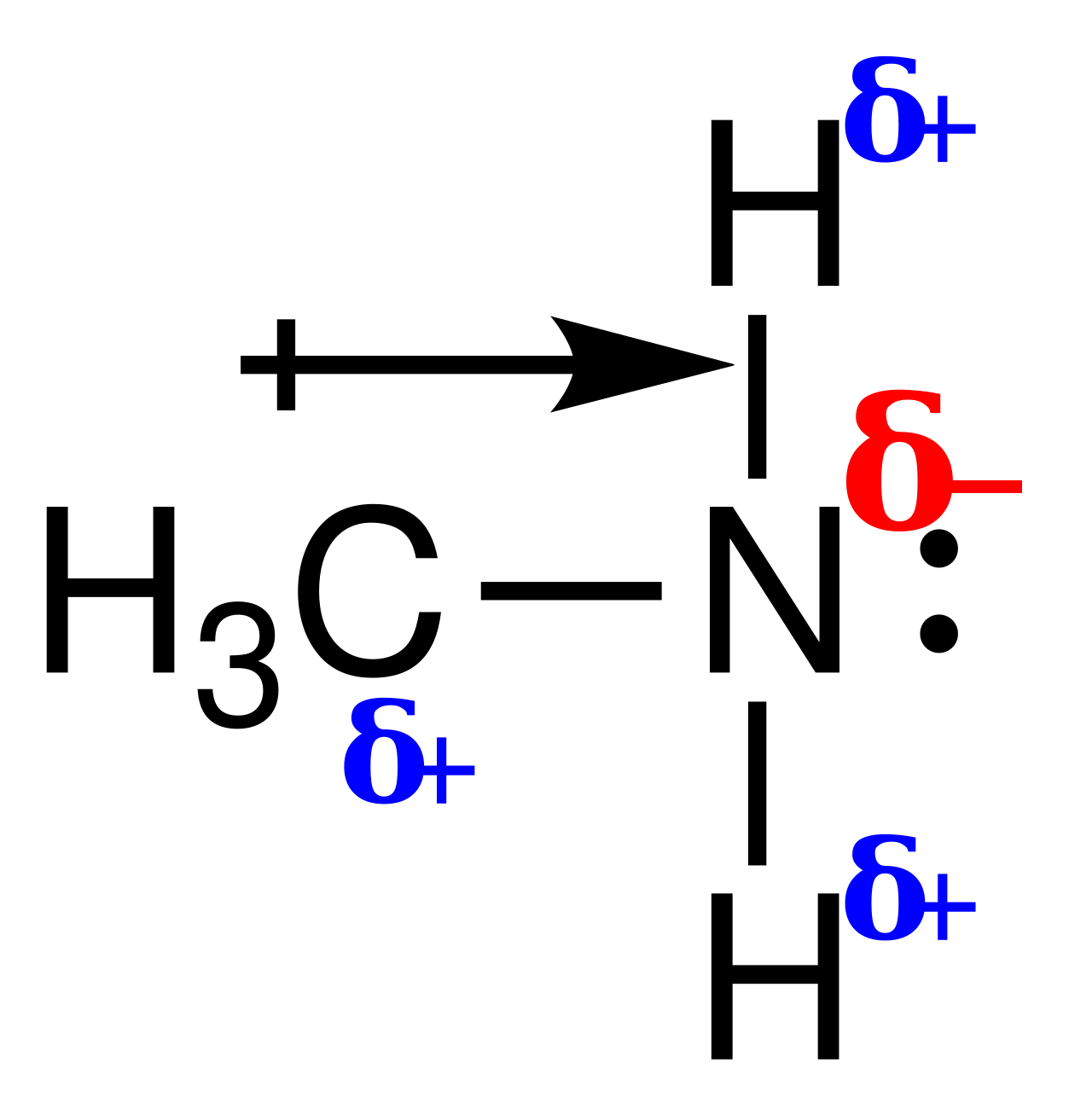
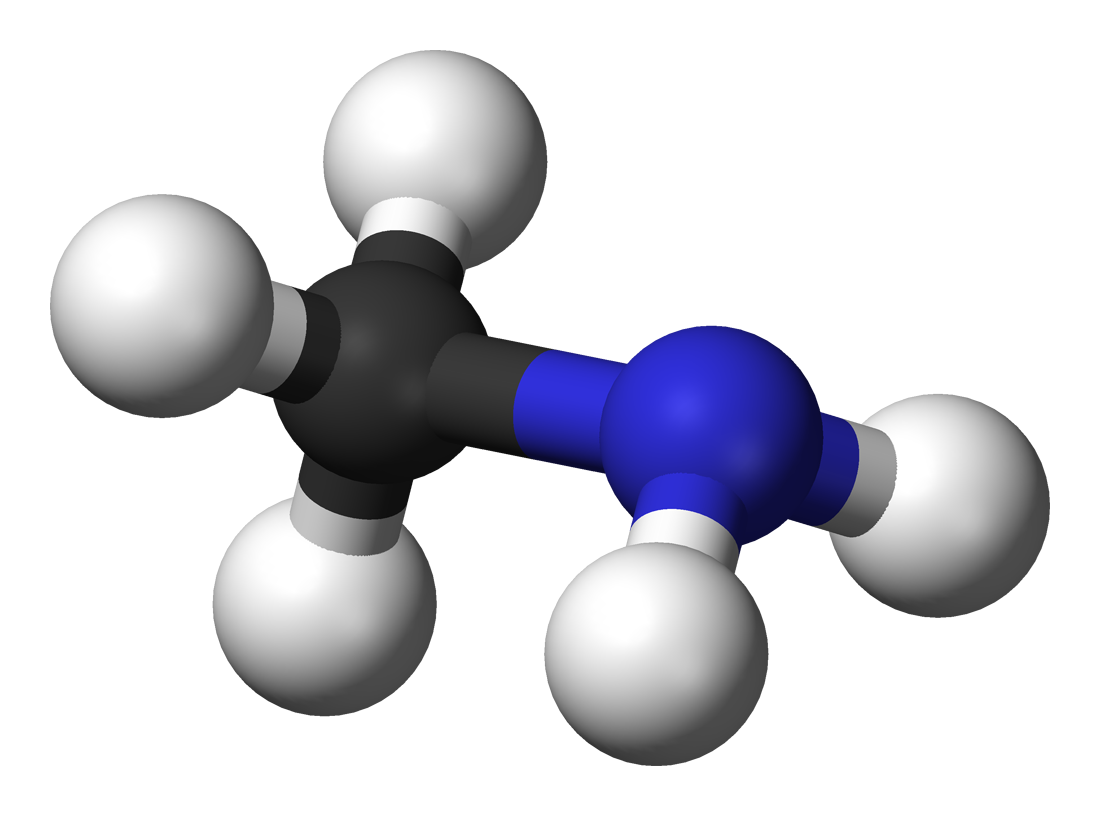
Methylamine, also known as methanamine, is an organic compound with the formula CH5N or CH3NH2. It is a colorless gas, a derivative of ammonia with one hydrogen atom replaced by a methyl group, and is the simplest primary amine. It is used as a building block for the synthesis of numerous commercially available compounds, including pharmaceuticals, pesticides, and solvents.
- chemical_formula
- CH5N or CH3NH2
- first_prepared_by
- Charles-Adolphe Wurtz
- industrial_production_started
- 1920s
- occupational_exposure_limit
- 10 ppm or 12 mg/m3 over 8-hour TWA
- ld50_mouse_subcutaneous
- 2.5 g/kg
Lore & Background
Industrial production began in the 1920s, developed by BASF using catalytic amination of methanol with ammonia discovered by Mittasch and colleagues; Commercial Solvents Corporation was a later U.S. producer. Laboratory methods include the Hofmann rearrangement from acetamide and bromine, treating formaldehyde with ammonium chloride, reducing nitromethane with zinc and hydrochloric acid, or spontaneous decarboxylation of glycine with strong base. Methylamine also arises from putrefaction and is a substrate for methanogenesis, and is produced during PADI4-dependent arginine demethylation. Methylamine is a good nucleophile and weak base, used in reactions with phosgene, carbon disulfide, chloroform, and ethylene oxide. It is a precursor to pharmaceuticals like ephedrine and theophylline, pesticides such as carbofuran and carbaryl, and solvents like N-methylformamide and N-methylpyrrolidone. In the United States, it is regulated as a List 1 precursor chemical due to its use in illicit methamphetamine production.
Reader's Guide
Methylamine is significant as the simplest primary amine and a versatile industrial building block. The discovery of alcohol amination by Kazimierz Smoleński and his wife Eugenia was pivotal for commercial production. Methylamine's role in synthesizing pharmaceuticals, pesticides, and solvents underscores its economic importance. However, its use in illicit methamphetamine production led to regulation as a List 1 precursor in the United States. The compound's strong odor and toxicity require occupational exposure limits set by OSHA and NIOSH. Its portrayal in popular culture, notably in the series Breaking Bad, has increased public awareness. Overall, methylamine exemplifies a simple molecule with broad industrial utility and regulatory significance.
Did You Know?
- Industrial production began in the 1920s, developed by BASF using catalytic amination of methanol with ammonia; Commercial Solvents Corporation was a later U.S. producer.
- In the United States, methylamine is a List 1 precursor chemical due to its use in illicit methamphetamine production.
Origins & the Road to Industry
Methylamine was first isolated in 1849 by Charles-Adolphe Wurtz, who obtained it through hydrolysis of methyl isocyanate and related compounds. For decades it remained largely a laboratory curiosity, prepared in small quantities via routes such as the Hofmann rearrangement of acetamide with bromine. The true turning point came after World War I, when Kazimierz Smoleński and his wife Eugenia discovered that alcohols—including methanol—could undergo amination on alumina or kaolin catalysts. They filed two patent applications in 1919 and published their findings in 1921. Commercial Solvents Corporation was the first to exploit the process on an industrial scale in the 1920s, initially using methylamine for dehairing animal skins. This breakthrough transformed methylamine from a niche reagent into a commodity chemical, laying the groundwork for the massive production volumes that would follow throughout the twentieth century.
Industrial Chemistry at Scale
Today the dominant commercial route couples ammonia with methanol over an aluminosilicate catalyst, yielding methylamine alongside water. The reaction is not perfectly selective: dimethylamine and trimethylamine are always co-produced, and the relative proportions of the three amines depend on reaction kinetics and the feed ratios of the starting materials. Notably, trimethylamine is the kinetically favored product, meaning that operators must carefully tune conditions to maximize the desired primary amine. By 2005, global output of methylamine reached an estimated 115,000 tons per year. In the field, the compound is handled as a colorless gas with a pronounced rotten-fish odor, typically shipped in anhydrous form inside pressurized railcars and tank trailers. For smaller-scale or laboratory use, it is available dissolved in methanol, ethanol, tetrahydrofuran, or water, or sealed in pressurized metal cylinders.
A Prolific Building Block
Because methylamine is an unhindered primary amine, it behaves as a strong nucleophile and a weak base, making it exceptionally versatile in organic synthesis. In the laboratory, it can be converted into methyl isocyanate by reaction with phosgene, into sodium methyldithiocarbamate using carbon disulfide and sodium hydroxide, into methyl isocyanide with chloroform and base, or into methylethanolamines via ethylene oxide. Liquid methylamine even serves as a solvent with properties analogous to liquid ammonia. On a commercial scale, its role as a precursor is even more impressive. It feeds directly into the synthesis of the pharmaceuticals ephedrine and theophylline, the pesticides carbofuran, carbaryl, and metham sodium, and the industrial solvents N-methylformamide and N-methylpyrrolidone. Surfactant manufacturers and producers of photographic developers also rely on methylamine as an essential intermediate, underscoring how one simple molecule threads through dozens of distinct product lines.
Safety, Regulation & Pop-Culture Echoes
Methylamine carries a mouse subcutaneous LD50 of 2.5 g/kg, and OSHA together with NIOSH have established an eight-hour time-weighted-average occupational exposure limit of 10 ppm, equivalent to 12 mg/m³. Beyond workplace safety, the compound occupies a sensitive regulatory position in the United States: the Drug Enforcement Administration classifies it as a List 1 precursor chemical because it can be diverted into the illicit manufacture of methamphetamine. This dual identity—legitimate industrial workhorse versus controlled precursor—gives methylamine an unusual place in chemical governance. The compound also crossed into mainstream culture through the AMC television series Breaking Bad, in which fictional characters Walter White and Jesse Pinkman employ aqueous methylamine as one step in their methamphetamine synthesis. Meanwhile, in nature, methylamine appears as a product of putrefaction, serves as a substrate in methanogenesis, and is generated during PADI4-dependent arginine demethylation, reminding us that this small molecule operates far beyond the laboratory bench.
Gallery




Frequently Asked Questions
Who is Methylamine?
Methylamine, also called methanamine, is a colorless gaseous organic compound with the formula CH₃NH₂. It is the simplest member of the primary amine family, formed by swapping one hydrogen on ammonia for a methyl group.
What is Methylamine's role in the chemical world?
It acts as a foundational precursor for synthesizing a broad range of commercial products, spanning pharmaceuticals, pesticides, and various solvents. In short, it is a key industrial building block that feeds into many downstream manufacturing processes.
What are Methylamine's key stats?
Its molecular formula is CH₅N (written structurally as CH₃NH₂), and it appears as a colorless gas at room conditions. Occupational safety guidelines cap exposure at 10 ppm, equivalent to 12 mg/m³, over an 8-hour time-weighted average.
Why is Methylamine considered important?
As the simplest primary amine, it holds a foundational position in both organic chemistry and industrial synthesis. Its versatility as a starting material makes it indispensable across pharma, agriculture, and materials science.
More in Chemical Substances And Materials 1-22
Spotted an error? Know more?
This is a living reference — every entry is fact-audited, and reader corrections feed straight into our audit queue. Suggest an edit · See this site's audit record