
Naphtha
Flammable hydrocarbon mixture used as fuel, dilutant, and plastic feedstock.

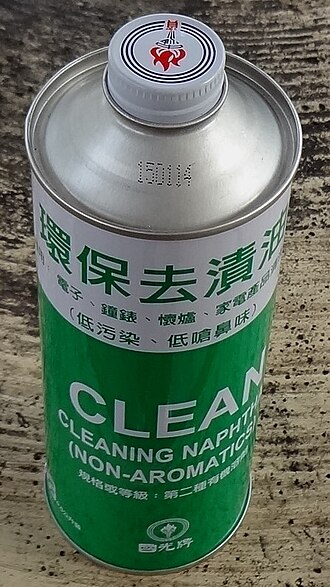
Mr.ちゅらさん · CC BY-SA 3.0
Naphtha is a flammable liquid hydrocarbon mixture, typically a fraction of crude oil but also producible from natural-gas condensates, petroleum distillates, and the fractional distillation of coal tar and peat. In some industries and regions, the name naphtha refers to crude oil or refined petroleum products such as kerosene or diesel fuel. It is used as a dilutant, a fuel, and in the production of plastics, and is also known as Shellite in Australia.
- field
- Hydrocarbon chemistry, petroleum refining
- known_for
- Flammable liquid hydrocarbon mixture used as dilutant, fuel, and plastic feedstock
- types
- Light naphtha, heavy naphtha, petroleum naphtha, coal tar naphtha
- etymology
- From Latin, Ancient Greek, Middle Persian, and Akkadian; cognates mean 'petroleum' or 'crude oil' in many languages
Lore & Background
The word naphtha comes from Latin through Ancient Greek, derived from Middle Persian naft, which was an assimilation from the Akkadian napṭu. In antiquity, the Treaty of Esarhaddon (c. BC) describes a 'thick water' that caught fire in sunlight, called 'Nephthar' or 'Nephthaei.' In Ancient Greek, naphtha referred to any petroleum or pitch, and it was used to stoke the fiery furnace in the Song of the Three Children. The naphtha of antiquity is explained as a highly flammable light fraction of petroleum, a chief ingredient in incendiary devices described by Latin authors of the Roman period.
Reader's Guide
Since the 19th century, solvent naphtha has denoted a product derived by fractional distillation from petroleum, originally the main active ingredient in Fels Naptha laundry soap, though later removed as a cancer risk. The term 'naphtha' during this time typically implies petroleum naphtha, a colorless liquid with a similar odor to gasoline, though 'coal tar naphtha' could also be intended. In pre-19th century sources, 'naphtha' simply meant crude oil, but this usage is now obsolete in English. Cognates in many modern languages signify 'petroleum' or 'crude oil,' with variations in specific meanings across countries. Naphtha is used to dilute heavy crude oil for transport, as fuel in wick-based lighters, camping stoves, and oil lanterns, and as a solvent in camera repair. It is a crucial component in plastics production. Health and safety data indicate hazards including flammability, carcinogenicity, and skin and airway irritation, with OSHA and NIOSH setting permissible exposure limits.
Did You Know?
- Naphtha is also known as Shellite in Australia.
- The word naphtha derives from Akkadian napṭu, with cognates in Arabic, Syriac, and Hebrew meaning petroleum.
- Naphtha was historically used as a fuel and working fluid in small boats to circumvent safety laws relating to traditional steam launches.
A Word Carried Through Millennia
The term naphtha traces a linguistic path arriving in English via Latin and Ancient Greek (náptha), both borrowed from Middle Persian naft, originally meaning "wet." That Persian form was itself an assimilation of the Akkadian napṭu, whose Semitic relatives include Arabic nafṭ, Syriac naftā, and Hebrew neft, all carrying the sense of petroleum. Its ancient reputation was formidable. The Treaty of Esarhaddon, dating to roughly 675 BC, invokes naphtha in a list of curses, threatening that a breaker of oaths would have their flesh made "as black as bitumen, pitch and naphtha." The book of II Maccabees recounts a "thick water" applied to a sacrifice during Nehemiah's time that ignited under sunlight, a substance onlookers called "Nephthar," meaning Purification. In the Mishnah, naphtha appears among oils generally permitted for Shabbat lamps, though Rabbi Tarfon restricted the practice to olive oil alone. Ancient Greek writers used the word broadly for any petroleum or pitch, and it appears in the Song of the Three Children as fuel for a fiery furnace. Roman-era Latin authors described naphtha as a highly flammable, extremely volatile, strong-smelling gaseous liquid from Near East oil deposits, and noted its role as a chief ingredient in incendiary weapons.
One Name, Many Meanings
Since the nineteenth century, the word naphtha has fractured into multiple technical and colloquial meanings that vary dramatically by region and industry. In English, "solvent naphtha" came to denote xylene or trimethylbenzenes obtained through fractional distillation of petroleum; these mineral spirits, also called "Stoddard Solvent," were once the primary active ingredient in Fels Naptha laundry soap before being removed due to cancer risk. "Petroleum naphtha" typically refers to a colorless liquid with a gasoline-like odor, while "coal tar naphtha" describes a reddish-brown mixture of hydrocarbons including toluene, xylene, and cumene. Yet across the globe, the same root word carries entirely different everyday meanings. In Ukrainian, Belarusian, Lithuanian, Latvian, Estonian, and Persian, nafta or naft simply means crude oil. Russian distinguishes neft' (crude oil) from nafta (a synonym of ligroin). Across much of the Balkans, nafta colloquially means diesel fuel. In Argentina, Uruguay, and Paraguay, it means gasoline, as it does in Flemish. Polish nafta means kerosene, and in Australia the substance is known as Shellite.
From Lighters to Pipelines
Naphtha's practical utility spans a range of applications. In the oil industry, it serves as a particularly efficient dilutant for heavy crude, reducing viscosity enough to allow pipeline transport and loading onto tankers—tasks that undiluted heavy crude simply cannot support. A key advantage is that naphtha can be recovered and recycled from the diluted stream after processing. As global production of lighter crudes has declined and exploitation has shifted toward heavier reserves, the importance of such dilutants has grown substantially. In everyday life, light naphtha is the "lighter fluid" drawn into the wick of commercial cigarette lighters like the Zippo, where a flint-and-wheel mechanism ignites it. Outdoor enthusiasts know it as "white gas" for camping stoves and oil lanterns, prized for its low boiling point and its tendency to clog fuel lines less than kerosene. The outdoor equipment maker MSR published a multilingual list of trade names to help hikers find the correct product abroad. Historically, naphtha powered small boats as both fuel and working fluid in contexts where steam technology was impractical. As an internal combustion fuel, however, it has seen very little use, suffering from low octane ratings of 40 to 70 RON and noisy combustion.
Sorting the Mixture
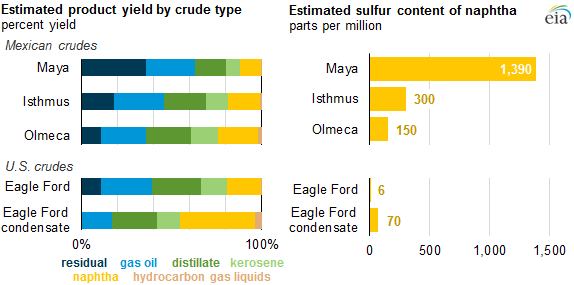
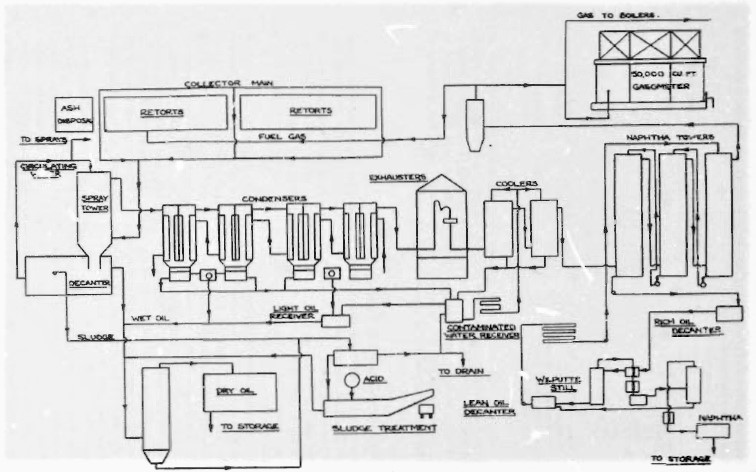
Naphtha is fundamentally a flammable liquid hydrocarbon mixture, most commonly a fraction distilled from crude oil, though it can also be derived from natural-gas condensates, petroleum distillates, or the fractional distillation of coal tar and peat. In certain industries and regions, the label naphtha stretches to encompass crude oil itself or refined products like kerosene and diesel fuel. Its industrial roles include serving as a dilutant, a fuel, and a feedstock in the production of plastics. To make sense of the many grades, most sources divide naphtha into light and heavy categories, differentiated by boiling point and the number of carbon atoms per molecule. The reference work Chemistry of Hazardous Materials further distinguishes the two based on carbon atom count and hydrocarbon structure. A broader category, petroleum naphtha, encompasses both light and heavy fractions and typically represents fifteen to thirty percent of crude oil by weight. In some contexts, the term may instead point to coal tar naphtha, a reddish-brown liquid composed of hydrocarbons such as toluene, xylene, and cumene. This layered taxonomy reflects the substance's dual identity: a single chemical family that, depending on origin and processing, can look, smell, and behave quite differently.
Gallery



Frequently Asked Questions
What exactly is naphtha?
Naphtha is a flammable liquid composed of a blend of hydrocarbons, most commonly drawn from a specific cut of crude oil. It can also be obtained from natural-gas condensates, petroleum distillates, or by fractionally distilling coal tar and peat.
What do people actually use naphtha for?
It serves three main roles: as a fuel, as a dilutant in industrial processes, and as a raw feedstock for manufacturing plastics. In some regions and industries, the term is even applied loosely to kerosene, diesel, or crude oil itself.
What types of naphtha exist?
The mixture is generally split into light and heavy naphtha based on boiling range, and further categorized by source—petroleum naphtha versus coal tar naphtha. These distinctions matter because each variant behaves differently in refining and manufacturing.
Where does the word 'naphtha' come from?
The term traces back through Latin, Ancient Greek, Middle Persian, and Akkadian, with cognate words in many languages simply meaning 'petroleum' or 'crude oil.' Its long linguistic history reflects how widespread the substance has been across ancient and modern civilizations.
Is naphtha the same thing as crude oil?
Not exactly—naphtha is a specific fraction distilled from crude oil rather than the full unrefined mixture. However, in certain industries and regions (including Australia, where it is called 'Shellite'), the word naphtha is used as a shorthand for crude oil or other refined petroleum products.
More in Chemical Substances And Materials 1-22
Spotted an error? Know more?
This is a living reference — every entry is fact-audited, and reader corrections feed straight into our audit queue. Suggest an edit · See this site's audit record