
Menthol
Natural compound producing cooling sensation and used medicinally for centuries.

Pittigrilli · CC BY 4.0
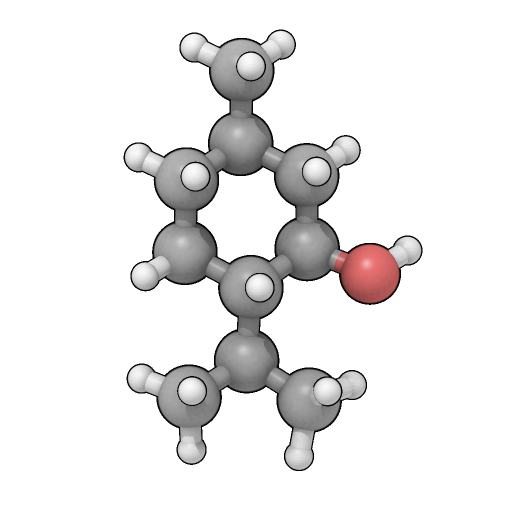
Menthol is a monoterpenoid organic compound that occurs naturally in the oils of certain plants in the mint family, such as corn mint and peppermint. It is a white or clear waxy crystalline substance that is solid at room temperature and melts slightly above. The main form of menthol occurring in nature is (−)-menthol, which is assigned the (1R,2S,5R) configuration. For many people, menthol produces a cooling sensation when inhaled, eaten, or applied to the skin, and mint plants have been used for centuries for topical pain relief and as a food flavoring. Menthol has local anesthetic and counterirritant qualities, and it is widely used to relieve minor throat irritation.
- melting_point_range
- 42–44 °C for (−)-menthol; 28–38 °C for racemic menthol
Lore & Background
Menthol occurs naturally in peppermint oil, along with menthone and menthyl acetate, and is obtained by freezing peppermint oil, with the resultant crystals separated by filtration. The biosynthesis of (−)-menthol takes place in the secretory gland cells of the peppermint plant, beginning with geranyl diphosphate and proceeding through a series of enzymatic steps including cyclization, hydroxylation, reduction, and isomerization to yield the final compound. Natural menthol exists as one pure stereoisomer, nearly always the (1R,2S,5R) form, and the (+)- and (−)-enantiomers are the most stable based on their cyclohexane conformations, with all three bulky groups able to orient in equatorial positions in a chair conformation.
Reader's Guide
Menthol is significant for its widespread use in medicine, cosmetics, and food, primarily due to its ability to chemically trigger cold-sensitive TRPM8 receptors, producing a cooling sensation without actual temperature change. It also acts as a local anesthetic and counterirritant, mediated through selective activation of κ-opioid receptors, and blocks calcium and voltage-sensitive sodium channels. Menthol has been demonstrated to cause a subjective nasal decongestant effect without objective decongestant action. Natural menthol is primarily sourced from China and India, with India having pushed China into second place. Its legacy includes applications in pain relief, oral hygiene, smoking tobacco additives, and even as a pesticide against tracheal mites of honey bees.
Did You Know?
- Menthol's cooling sensation is caused by chemically triggering TRPM8 receptors, not by an actual temperature change.
- Preliminary research suggests menthol may improve cognitive decline in mice with Alzheimer's disease, but this is not yet a confirmed finding in humans.
- The biosynthesis of (−)-menthol in peppermint involves at least eight enzymatic steps starting from geranyl diphosphate.
- Some studies suggest menthol may influence nicotine receptor activity, but the exact mechanisms—including claims of increased receptor density—are still under investigation and not universally accepted.
Molecular Architecture and Crystal Polymorphism
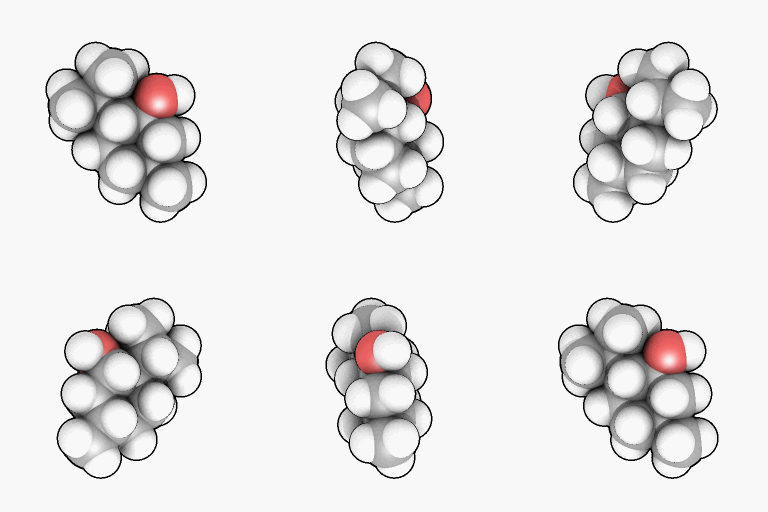
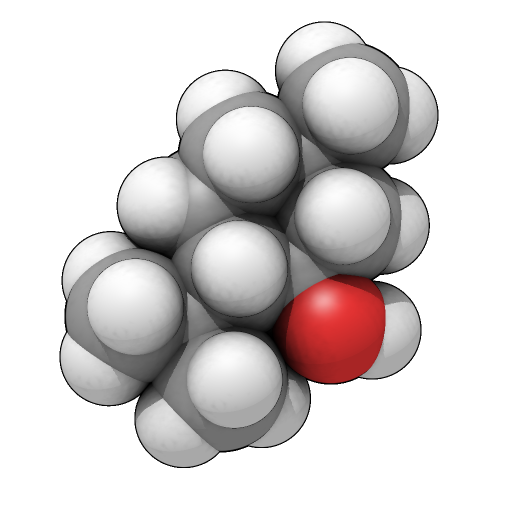
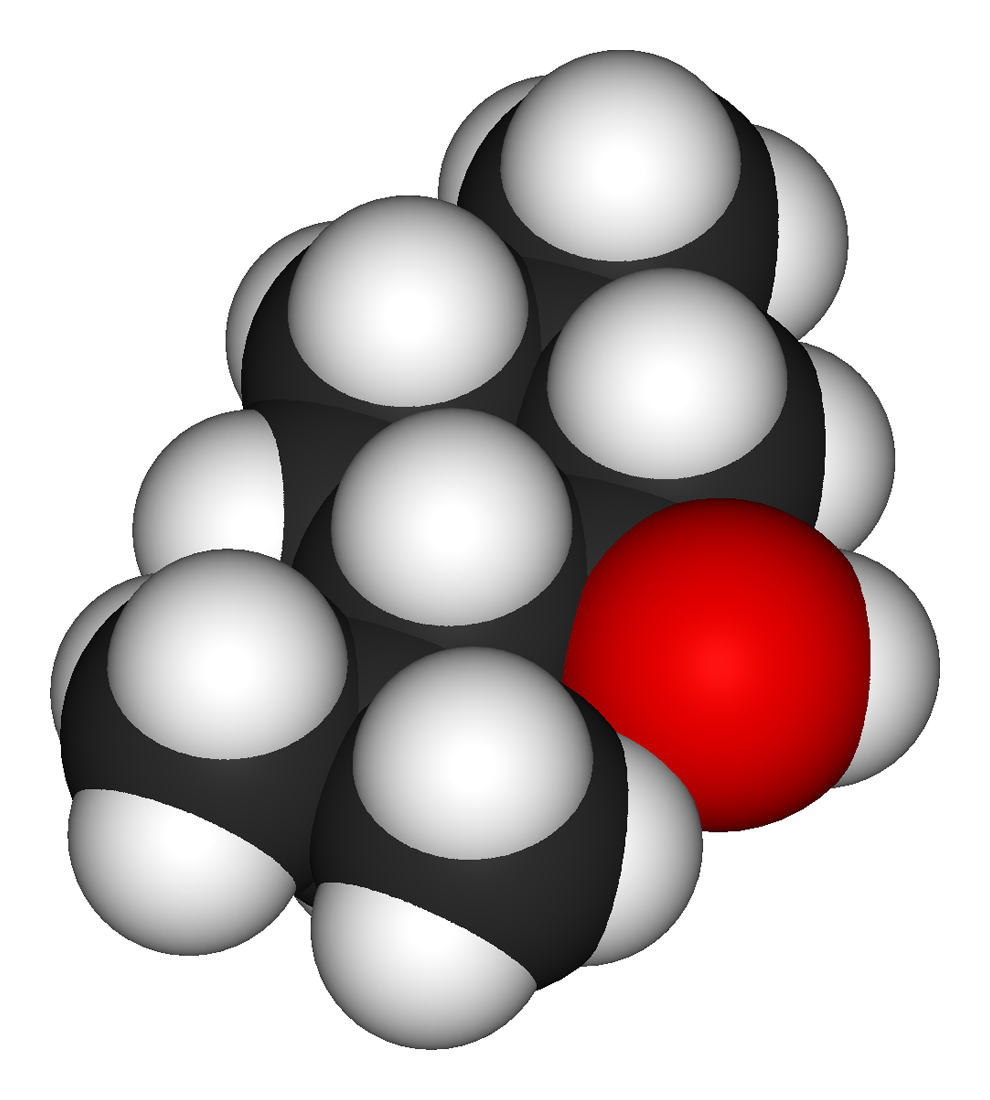
Menthol is a monoterpenoid organic compound found naturally in the oils of mint-family plants such as corn mint and peppermint. At room temperature it presents as a white or clear waxy crystalline solid, melting just slightly above ambient conditions. The predominant natural form is (−)-menthol, assigned the (1R,2S,5R) stereochemical configuration, in which the isopropyl group occupies a trans orientation relative to both the methyl and hydroxyl substituents. Of the eight theoretically possible stereoisomers, the (+)- and (−)-enantiomers are the most conformationally stable: their cyclohexane rings settle into a chair geometry that permits all three bulky groups to adopt equatorial positions simultaneously. Racemic menthol crystallizes in two distinct polymorphs with melting points of 28 °C and 38 °C, whereas pure (−)-menthol exhibits four crystal forms. The thermodynamically most stable of these is the α polymorph, readily identified by its characteristic broad needle-like habit.
Pharmacological Actions and Receptor Interactions
Menthol's celebrated cooling sensation arises from its capacity to chemically activate TRPM8 cold-sensing receptors in the skin, a mechanism functionally parallel to capsaicin's stimulation of heat sensors without any genuine temperature change. Its analgesic effect is mediated through selective activation of κ-opioid receptors, while concurrent blockade of calcium channels and voltage-sensitive sodium channels suppresses the neural signaling that drives muscle contraction. Further research reveals menthol acts as a positive allosteric modulator at GABAA receptors, amplifying GABAergic transmission in periaqueductal gray neurons and producing anesthetic properties comparable to, though less potent than, propofol through interaction at the same receptor sites. It may additionally enhance glycine receptor activity and negatively modulate both 5-HT3 and nicotinic acetylcholine receptors. In practical applications, menthol serves as a topical antibacterial agent in dental care, effective against multiple species of streptococci and lactobacilli. Through TRPM8 activation it also lowers blood pressure and antagonizes vasoconstriction. Notably, inhalation studies in mice modeled with Alzheimer's disease demonstrated improved cognitive function alongside immunostimulatory effects.
Biosynthetic Pathway in Peppermint Gland Cells
The biosynthetic pathway to (−)-menthol operates within the secretory gland cells of peppermint (Mentha × piperita), and the enzymes at each step have been identified and characterized. The sequence begins with geranyl diphosphate synthase catalyzing the condensation of isopentenyl pyrophosphate and dimethylallyl pyrophosphate into geranyl diphosphate. (−)-Limonene synthase then cyclizes this precursor to (−)-limonene. (−)-Limonene-3-hydroxylase, utilizing molecular oxygen and NADPH, performs an allylic hydroxylation at the 3-position to yield (−)-trans-isopiperitenol. Oxidation of the 3-hydroxyl group by (−)-trans-isopiperitenol dehydrogenase, with NAD+ as cofactor, produces (−)-isopiperitenone. Reduction of the C1–C2 double bond by (−)-isopiperitenone reductase (NADPH-dependent) gives (+)-cis-isopulegone, which (+)-cis-isopulegone isomerase rearranges to (+)-pulegone. The final two steps—reduction of the remaining double bond by (+)-pulegone reductase to (−)-menthone, followed by carbonyl reduction by (−)-menthone reductase—deliver (−)-menthol, with NADPH supplying electrons in each reductive step.
Industrial Production and Global Market Dynamics
Natural menthol is extracted by freezing peppermint oil and filtering the resulting crystals, with wild mint (Mentha arvensis) as the principal source species. In 1998, global menthol production reached 12,000 tonnes, of which 2,500 tonnes was synthetic; by 2005 synthetic output had nearly doubled. Market prices generally fall between $10 and $20 per kilogram, with peaks around $40/kg and occasional spikes to $100/kg. China was estimated in 1985 to supply most of the world's natural menthol, though India has since overtaken it. On the synthetic side, Takasago International Corporation produces a single enantiomer at 94% enantiomeric excess on a scale of 3,000 tonnes per year, using an asymmetric synthesis developed by Ryōji Noyori's team—work recognized with the 2001 Nobel Prize in Chemistry. The route converts myrcene via asymmetric isomerization with a BINAP rhodium complex to enantiomerically pure R-citronellal, cyclizes it to isopulegol through a zinc bromide-initiated carbonyl-ene reaction, and hydrogenates to pure (1R,2S,5R)-menthol. The Haarmann–Reimer process, named for the company now part of Symrise, starts from m-cresol, alkylates with propene to thymol, hydrogenates, and isolates racemic menthol by fractional distillation before chiral resolution.
Gallery


Frequently Asked Questions
Who is Menthol?
Menthol is a monoterpenoid organic molecule that occurs naturally in the essential oils of mint-family plants such as peppermint and corn mint. In its predominant natural form, (−)-menthol, it carries the (1R,2S,5R) stereochemical configuration.
What are Menthol's powers/role?
Its signature ability is triggering a distinct cooling sensation on skin, in the mouth, or in the nasal passages, which has made it a staple in topical pain-relief preparations for centuries. It also serves as a mild local anesthetic and a popular flavoring agent in foods and beverages.
What does Menthol look like?
At room temperature it presents as a white or transparent waxy crystalline solid. It only softens into a liquid once the temperature climbs just past its melting range, so it stays firmly solid under everyday conditions.
Where does Menthol come from?
It is biosynthesized by select Lamiaceae (mint family) species, with corn mint and peppermint being the most well-known natural sources. Plant extracts rich in the compound have been harvested for medicinal and culinary purposes for hundreds of years.
What's Menthol's melting point?
The naturally occurring (−)-menthol enantiomer melts between 42 and 44 °C. The synthetic racemic mixture, by contrast, shows a broader and lower window of roughly 28 to 38 °C.
More in Chemical Substances And Materials 1-22
Spotted an error? Know more?
This is a living reference — every entry is fact-audited, and reader corrections feed straight into our audit queue. Suggest an edit · See this site's audit record