Frequently Asked Questions
The most-asked questions about chemical substances and materials.
What exactly are 'chemical substances and materials' as a field of study?
It is the broad investigation of everything matter is composed of, ranging from single atoms and small molecules to engineered composites and everyday objects. At its heart, the field asks what things are built from, how those building blocks link together, and what properties emerge from those connections.
Who are the most central figures in the history of the discipline?
Antoine Lavoisier is often credited with establishing modern chemical nomenclature and the law of mass conservation, while Dmitri Mendeleev's periodic table remains the field's foundational organizing principle. Marie Curie's pioneering radioactivity research and Linus Pauling's quantum-mechanical theory of chemical bonding are two other landmark contributions that reshaped how the subject is understood.
Where should a complete beginner start?
The periodic table is the natural entry point, since nearly every other topic references element identities and recurring property trends. From there, grasping the basics of ionic, covalent, and metallic bonding gives you the vocabulary needed to follow reactions and material behavior with confidence.
What are the main categories or branches the community usually discusses?
The field splits into organic chemistry (carbon-centric molecules), inorganic chemistry (coordination compounds, minerals, and non-carbon frameworks), physical chemistry (thermodynamics, kinetics, quantum effects), and materials science (polymers, ceramics, metals, composites). The overlaps—such as polymer chemistry, catalysis, and organometallics—are where much of the most active research and fan discussion lives.
What is the single most iconic substance in the field?
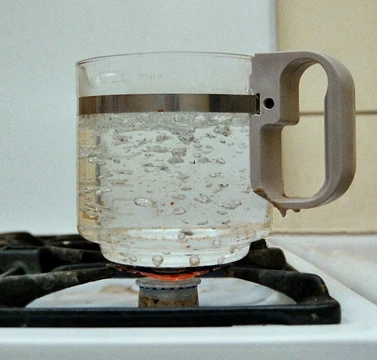
Water (H₂O) is arguably the most referenced compound because its unusual hydrogen-bonding network explains a huge range of biological, geological, and everyday chemical behavior. Carbon is a close second, given its ability to form an almost infinite variety of stable structures, from diamond and graphite to graphene and long-chain polymers.
Which properties do people look up most often?
Melting and boiling points, solubility, density, and electrical or thermal conductivity are the go-to physical descriptors. On the chemical side, reactivity, oxidation state, and bond energy determine how a substance will behave in a given environment or reaction.
What is considered the most pivotal discovery moment in the field's history?
The formulation of the periodic table in 1869 is widely regarded as the turning point, because it transformed thousands of isolated elements into a single predictable, patterned system. The subsequent discovery of the electron in 1897 and the quantum-mechanical model of the atom then explained why those periodic patterns exist at all.
How do substances actually interact with one another?
Interactions span a wide spectrum, from weak van der Waals forces and hydrogen bonds to full electron-sharing covalent bonds and electron-transfer ionic bonds. The strength, directionality, and geometry of those interactions ultimately dictate whether a collection of atoms behaves as a gas, a liquid, a rigid crystal, or a flexible polymer.
Are there long-standing rivalries or debates within the community?
The old organic-versus-inorganic divide, once a hard philosophical line rooted in vitalism, has largely blurred as bio-inspired and organometallic chemistry grew. In materials science, the competition between mature silicon-based technology and emerging two-dimensional materials like graphene is a current hot topic that generates a lot of debate.
Where can I find a comprehensive catalog of everything known?
The periodic table covers the 118 confirmed elements, and major databases such as PubChem, the CRC Handbook, and IUPAC maintain standardized names, structures, and properties for millions of characterized compounds. For crystalline and engineered materials specifically, the Materials Project and the Inorganic Crystal Structure Database are the go-to reference resources.